
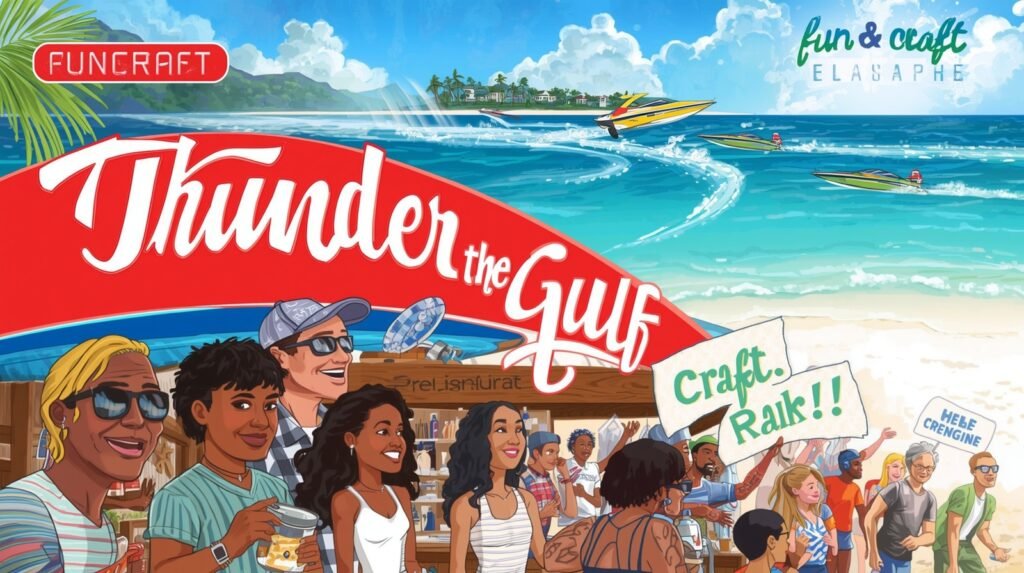
There’s something almost magical about standing on the Gulf Coast when the air fills with the roar of powerboat engines and the scent of fresh paint from nearby art stations. Fun Craft Thunderonthegulf doesn’t fit neatly into any single category, and that’s precisely what makes it so compelling. This isn’t your typical arts festival where you awkwardly shuffle past booths pretending to admire handmade soap. Nor is it just another racing event where spectators squint at distant boats. It’s both, somehow, and the combination works in ways you wouldn’t expect until you’re actually there.
The festival transforms the Gulf Coast Regional Center into something that feels alive with possibility. Local artisans set up elaborate workstations next to high-tech racing displays, creating this weird but wonderful juxtaposition that somehow makes perfect sense. You might watch someone demonstrate traditional wheel throwing techniques while listening to the distant thunder of precision engineering roaring across the water. It’s disorienting at first, then oddly exhilarating.
The Creative Heart: Arts and Crafts That Actually Matter
Walking through the interactive craft zones feels less like attending a festival and more like stepping into someone’s incredibly well-organized creative brain. The pottery section alone spans everything from beginner-friendly hand-building projects to advanced throwing techniques that look deceptively simple when demonstrated by masters. I’ve watched visitors go from “I could never do that” to producing recognizable bowls in under an hour, which says alot about the quality of instruction.
The jewelry making stations deserve special mention because they’ve moved far beyond the friendship bracelet vibe you might expect. Artisans work with recycled materials, sustainable metals, and even glass techniques that date back centuries. One craftsperson I spoke with sources reclaimed silver from old electronics, transforming circuit boards into wearable art that sells out within hours. The skill level required is intermediate at minimum, but beginner workshops run continuously for those wanting to dip their toes in.
Woodworking demonstrations draw surprisingly large crowds, probably because there’s something universally satisfying about watching someone transform raw lumber into intricate carvings. The sustainable design focus means many artisans discuss wood sourcing as much as technique—where it came from, how it was harvested, why certain grains work better for specific projects. This isn’t just craft education; it’s environmental awareness wrapped in creative expression.
Hands-On Learning That Actually Teaches
The difference between watching and doing cannot be overstated here. Every craft category offers hands-on learning opportunities that range from quick 30-minute introductions to intensive three-hour deep dives. Professional artisans guide participants through material exploration stations where you can touch, feel, and experiment with everything from different paint consistencies to various wood densities.
Live craft demonstrations happen throughout the day on rotating schedules. Unlike passive observation, these sessions encourage questions, mistakes, and experimentation. I watched a watercolor artist explain negative space painting while simultaneously creating a Gulf Coast sunset scene, answering questions without breaking concentration. That’s the level of multitasking skill on display.
Collaborative art projects tend to be the most memorable experiences for families. Large canvases or sculpture installations allow dozens of people to contribute small pieces that form cohesive wholes by day’s end. Children especially gravitate toward these because there’s no pressure to be perfect—just add your mark and watch something bigger emerge.
Powerboat Racing: Engineering Masterpieces at Full Throttle
The racing component feels almost incongruous until you realize how much craftsmanship goes into building these machines. These aren’t off-the-shelf speedboats; they’re custom-engineered vessels representing hundreds of hours of meticulous work. The professional divisions showcase cutting-edge boat technologies that wouldn’t look out of place in aerospace engineering discussions, while amateur categories demonstrate that passion and skill development matter more than unlimited budgets.
Safety-first performance standards dominate every aspect of the racing, which actually makes it more exciting rather than less. Knowing that every boat meets rigorous specifications and every driver wears state-of-the-art protective gear means you can enjoy the adrenaline without constant worry. The precision engineering showcases between races explain exactly what makes these boats so fast and maneuverable, turning spectators into semi-educated enthusiasts.
Viewing locations matter more than you’d think. The main grandstand offers comprehensive race views but gets crowded early. The VIP observation deck provides elevated perspectives and climate control, which becomes crucial during September’s Gulf Coast heat. Waterfront viewing areas put you close enough to feel the spray and hear the engines’ full roar, creating that visceral spectator experience people remember years later. Technology-enhanced replay zones show multiple camera angles simultaneously, perfect for understanding race strategies and close finishes.
Where Adrenaline Actually Meets Art
The festival organizers clearly understand something fundamental: the same mindset that creates beautiful pottery also appreciates finely-tuned machinery. Both require patience, precision, and understanding how materials behave under stress. Craftspeople and racing enthusiasts share more common ground than either group might initially recognize, and watching them interact throughout the festival proves it.
Between races, many spectators drift back toward craft zones, and between workshop sessions, artisans head waterward to catch racing action. This natural flow creates unexpected conversations—a metalworker discussing hull stress with a boat engineer, a painter analyzing racing livery designs, children explaining their eco-craft projects to race team members who seem genuinely interested.
Family-Friendly Adventure Without the Usual Compromises
Most “family-friendly” events either bore adults or overwhelm children. Fun Craft Thunderonthegulf somehow avoids both pitfalls through thoughtful programming and space design. Kid-centric craft activities happen in dedicated zones with age-appropriate materials and supervision, freeing parents to participate in more advanced workshops without constant worry.
The STEAM-integrated workshops deserve particular praise because they sneak education into entertainment so smoothly that kids don’t realize they’re learning. A boat-building workshop for children aged 7-12 covers buoyancy, weight distribution, and basic physics while the kids think they’re just making cool toys. These float-testing sessions in shallow pools generate more excitement than most expensive amusement park rides.
Parent-child collaboration zones recognize that creating together builds bonds differently than other activities. Working side-by-side on a painting or pottery project removes the usual parent-as-authority dynamic, replacing it with shared discovery. I overheard one father tell his daughter, “You’re better at this than me,” with genuine surprise and pride—moments like that justify the entire festival’s existence.
Storytelling Through Creative Expression
Children naturally turn crafts into narratives. That painted rock becomes a character with backstory. The clay sculpture represents their pet or imaginary friend. Workshop facilitators encourage this rather than pushing for realistic representations, understanding that creative confidence matters more than technical perfection at young ages.
The benefits extend beyond the festival itself. Parents consistently report that children who participate in these workshops continue creating at home, often with renewed confidence and expanded skill sets. Problem-solving abilities improve because crafting requires planning, adaptation, and sometimes starting over. Fine motor skills development happens naturally through repeated hand movements required for various techniques. Teamwork emerges in group projects where kids learn to share materials, respect others’ creative choices, and appreciate different approaches.
Planning Your Visit: Practical Information That Actually Helps
The Gulf Coast Regional Center location provides easy access with ample parking, though arriving early on Saturday (the busiest day) is advisable. September 15-17 dates take advantage of slightly cooler Gulf Coast weather—still warm but usually not oppressively hot. The 9 AM to 7 PM daily schedule allows morning people to beat crowds and evening folks to enjoy cooler temperatures.
Ticket prices remain remarkably reasonable considering the scope of activities included. At $25 for adults and $15 for children aged 6-12, the value proposition is strong. The $60 family pass covers two adults and up to three children, making it economical for larger families. Children under 6 enter free, which almost feels too generous given the quality of kid-focused programming.
What to actually bring matters more than most festival guides acknowledge:
Comfortable walking shoes are non-negotiable because you’ll cover miles wandering between zones. Those cute sandals will destroy your feet by noon. A refillable water bottle saves money and reduces waste—free water stations appear throughout the venue. Sunscreen application should happen before arrival and reapplication every two hours, even on cloudy days. Gulf Coast sun doesn’t negotiate. Cameras or phones with decent storage capture memories, though some workshops prohibit photography during instruction to prevent distraction. A small notepad for jotting down workshop ideas, artist contact information, or techniques you want to remember later proves surprisingly useful.
Strategic workshop selection requires reviewing the schedule available online at thunderonthegulf.com several days before attendance. Popular sessions fill quickly, so advance registration helps. Match workshops to actual skill levels rather than aspirational ones—intermediate woodworking assumes you know basic tool safety and usage. Mix challenging workshops with purely enjoyable ones to avoid creative burnout. Consider everyone’s interests when planning family schedules rather than dragging reluctant participants to activities they’ll hate.
Community Impact Beyond Entertainment Value
Fun Craft Thunderonthegulf functions as more than temporary entertainment; it’s a genuine community catalyst with measurable impacts. Supporting local artisans through vendor fees, sales commissions, and exposure creates sustainable income streams for creative professionals who struggle in traditional employment markets. Many artists report that festival connections lead to commissioned work, gallery shows, or teaching opportunities throughout the year.
Promoting cultural heritage happens organically when traditional crafts receive equal billing with contemporary techniques. Younger generations discover skills their grandparents practiced, creating intergenerational knowledge transfer that might otherwise disappear. Regional tourism benefits extend beyond the festival dates as visitors discover the Gulf Coast’s broader attractions, often returning for extended vacations.
The economic contributions ripple outward in ways that initial numbers don’t capture. Hotels, restaurants, and local businesses experience increased traffic. Creative industries gain visibility and legitimacy, encouraging more young people to consider artistic careers viable rather than frivolous. The festival essentially argues that creativity and craftsmanship deserve economic support and cultural celebration, a message that resonates more each year.
Real Testimonials That Ring True
“This festival changed how I see creativity!” says Sarah M., a first-time visitor whose initial skepticism dissolved within her first hour. She arrived expecting craft fair kitsch and discovered serious artisans practicing legitimate skills. Her statement reflects something common among attendees—preconceptions shattered by actual experience.
Robert T., parent of two energetic children, notes that “My kids discovered talents they never knew existed.” His son, previously interested only in video games, spent three hours in the woodworking zone and now wants tools for his birthday. His daughter’s pottery creations now crowd their kitchen shelves. These aren’t isolated incidents; similar stories emerge from dozens of families each year.
Why This Festival Matters More Than Most
In an increasingly digital world where screens mediate most experiences, Fun Craft Thunderonthegulf offers something increasingly rare: genuine hands-on creation. The tactile satisfaction of shaping clay, the problem-solving required when a painting doesn’t go as planned, the adrenaline rush of watching skilled racers navigate challenging courses—these create memories that passive entertainment cannot match.
The festival also challenges false dichotomies between art and engineering, creativity and competition, education and entertainment. By refusing to choose between these supposedly opposing forces, it demonstrates that human interests are more complex and interconnected than simple categories allow. You can appreciate both delicate watercolor techniques and powerful boat engines. You can value both traditional craftsmanship and cutting-edge technology. The festival says “yes, and” rather than “either, or.”
Whether you’re an art enthusiast seeking inspiration, an adventure seeker craving adrenaline, or a curious family wanting shared experiences, Fun Craft Thunderonthegulf delivers. It’s an invitation to explore capabilities you didn’t know you had, create things you didn’t know you could, and connect with others over shared discovery. That’s not marketing hyperbole—that’s what actually happens when creativity and adventure collide on the Gulf Coast.